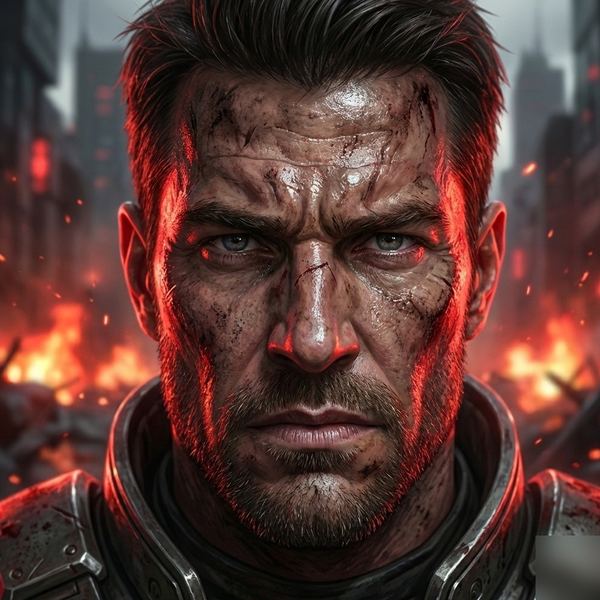
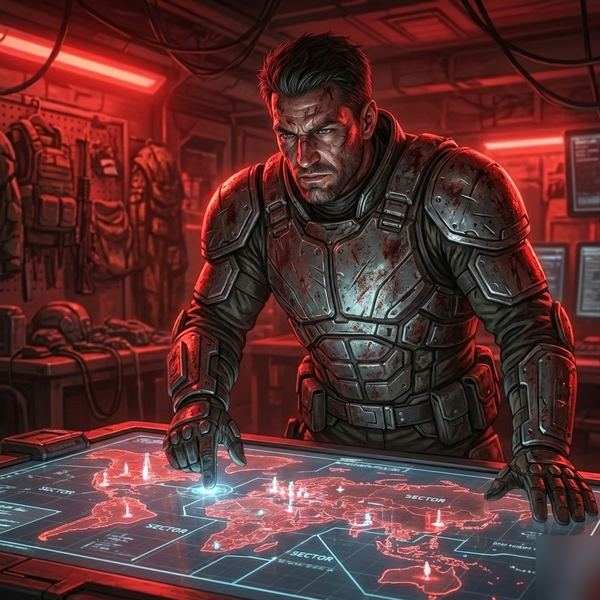
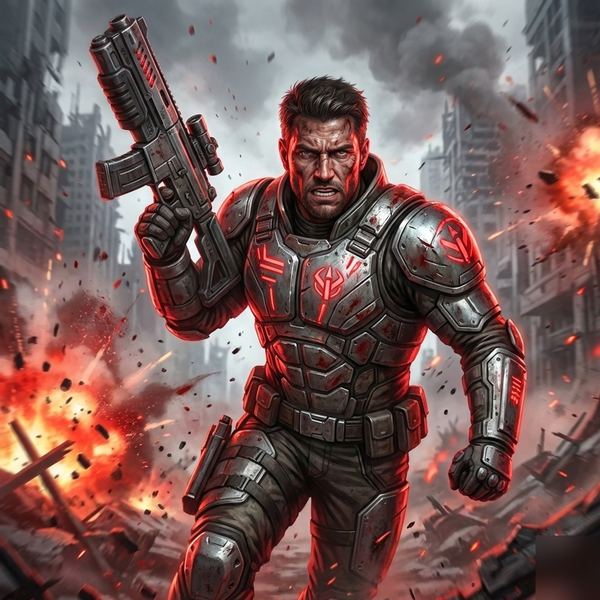
High Command · Resistance · Founder · Avalon City Ruins
The Origin
Before the war, Arden Vale was a Corporate logistics manager. He was good at his job. He understood systems, supply chains, the movement of people and materials through urban grids. He had a partner named Dayan, a cat named Circuit, and a two-bedroom apartment in District 9 of Avalon City. He was twenty-seven years old and had never held a weapon.
The Synth strike on District 9 happened on the morning of Year 2073, Day 43. It was not a military strike — District 9 had no military assets. The Synth had identified it as a Corporate data relay hub, which was technically accurate. The fact that 40,000 civilians lived in the district surrounding that relay hub was a variable the Synth had assessed and classified as acceptable collateral.
The Corporate military was positioned eight kilometers away. The response brief that arrived six hours later classified the event as a “Synth tactical incursion with acceptable collateral engagement” and estimated two to four weeks for infrastructure recovery. Corporate leadership approved the brief and moved to the next agenda item.
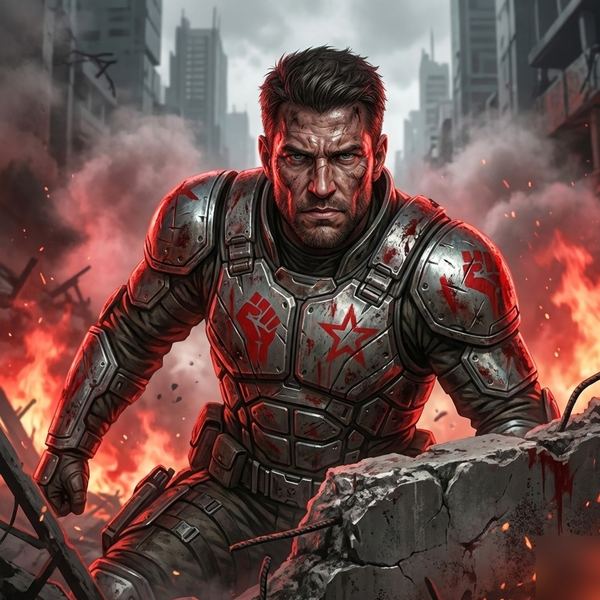
Arden Vale spent the next fourteen hours pulling people from burning buildings with his bare hands. He found Dayan on the third floor of their building, under a collapsed section of ceiling. Dayan had survived the initial strike but not the six hours it took for help to arrive. This was the Corporate’s calculation made physical and irreversible.
When it was over, Arden sat in the ruins of his street and counted. He counted every name he could find. He wrote them on the wall first, then on paper, then — because he understood that paper burns — on his left arm. When the arm ran out he wrote smaller. He kept writing. He wrote 347 names. He wrote Dayan’s name last.
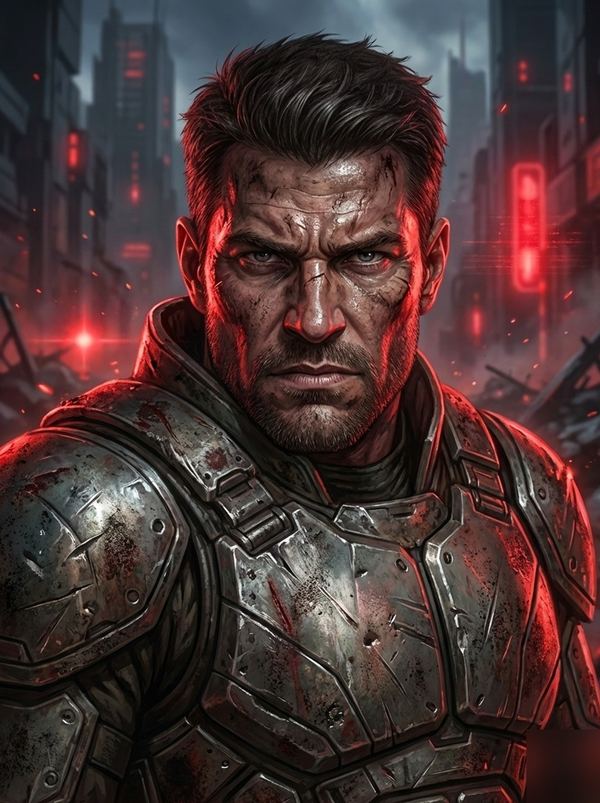
Faction Reel
I don't fight to win. I fight because stopping would mean it was all for nothing. And I will not allow it to be all for nothing.
— Commander Arden Vale, address to the First Resistance Cell, Year 2073
The Breaking Point
Arden did not start the Resistance the night of the strike. He started it the morning he read the Corporate brief. The brief was three pages. It contained zero names. It contained the phrase “acceptable collateral” four times. It contained, at the end, a projection of insurance payout timelines for property damage.
He printed the brief. He walked to the Corporate district administrative office. He asked to speak to the Director of Civil Response. He was told the Director was unavailable. He sat down in the waiting room. He waited for eleven hours. When the building closed, a security guard politely explained that the Director had left through a side entrance four hours earlier.
Arden Vale walked back to District 9. He knocked on the door of a logistics colleague who had also lost family in the strike. He said: “They filed a brief. They called it acceptable. I need to know if you want to do something about it.”
Eleven people came to the first meeting. Within three months, the Resistance had two hundred members. Within a year, two thousand. Arden’s logistics background meant he built the organization with the same precision he had used to manage supply chains: cells that didn’t know each other, communication protocols that couldn’t be compromised, resource networks that worked independently of any single node.
He lost his first unit in Year 2073 — seven people who trusted him with their lives and died because he had misjudged Corporate response time by forty minutes. He added their names to his arm. He wrote them next to Dayan’s. He adjusted his models.
His sister — not blood, but raised together, which he considers the same thing — Mira Voss came to him in Year 2073 carrying something the Corporate had tried to erase. What she brought with her changed everything about how the Resistance understood the war they were fighting.
The Drive
Arden Vale’s founding principle is not complicated: no government, no corporation, no machine makes the decision about who lives and who is acceptable collateral. That decision is made by humans, or it is made by no one. This is not ideology for him. It is the result of counting 347 names.
His weakness — which Mira sees and which he knows she sees — is that his certainty about this principle has calcified into an inability to consider alternatives. He cannot see a path that doesn’t look exactly like the path he chose. He has made this mistake twice in ways that cost lives. He has added those names to his arm. He is still unable to consider alternatives. This is the thing about him that is both the most admirable and the most dangerous.
Combat & Character Profile
Core Strengths
Critical Vulnerabilities
Key Relationships

Mira Voss
Sister · Closest Advisor
Not blood, but raised together, which he considers identical. She is smarter than him. He knows this. She is the only person whose assessment he trusts over his own. She is also the only person whose death would break something in him that he would not survive intact.

Kara Voss
Difficult Ally · Genuine Respect
Respects Kara deeply. Doesn't fully trust the Nomads' commitment to anything beyond survival. Kara has told him to his face that she finds his ideology inconvenient. He respects this more than most people's agreements.

Director Reyes
Primary Enemy · Complicated Mirror
The man whose brief classified 347 people as acceptable. Arden has studied Reyes for four years. He understands him better than most people would be comfortable with. He is aware that in different circumstances, the precision Reyes applies to war is not entirely unlike the precision Arden applies to the Resistance. He does not examine this too closely.
Visual Chronicle
Faction
Explore the full faction — their philosophy, territory, history, and place in the Singularity War.
Explore The Resistance →Co-Hero
Operating alongside Cmdr. Arden Vale, this co-hero brings a different perspective to the same war — same faction, different edge. Their stories are intertwined.
Read Mira Voss's Story →